Designing with Dachshunds: Unpacking the Weenie Wonderland Clipart
The Anatomy of a Festive Design Asset
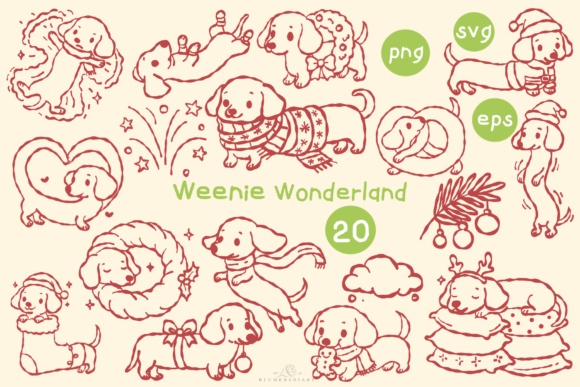
When you are building a brand or a marketing campaign, the assets you choose define your visual language. We aren't just talking about a premium font or a standard sans serif font for body copy; we are talking about the character illustrations that bring personality to the page. The Weenie Wonderland Clipart set is a prime example of how specific, niche imagery can elevate a project from generic to memorable. It consists of 20 hand-drawn dachshund Christmas line art doodles. These aren't stiff, corporate vector shapes; they are expressive, whimsical illustrations featuring sausage dogs in various states of holiday cheer—making snow angels, hiding in stockings, and wearing scarves.
The visual style here is crucial. It balances the "doodle" aesthetic with clean line work, making it versatile for both print design and digital overlays. Because the set includes transparent PNGs at 300 DPI, you have high-resolution raster files perfect for quick mockups or social media posts. However, the inclusion of SVG vector files and EPS vector files is what makes this a professional-grade design asset. Vectors ensure that whether you are scaling this dachshund for a massive storefront window or shrinking it for a favicon on a web design project, the lines remain crisp. This scalability is the backbone of modern typography and illustration standards.
Integrating Illustrations into Brand Identity
Using clipart effectively requires a strategist's mindset. You cannot simply drop a dachshund in a stocking onto a business card and call it a day. The Weenie Wonderland Clipart works best when it supports your brand identity rather than overwhelming it. For a pet boutique, a veterinarian’s holiday newsletter, or a bakery specializing in "pup-cakes," these illustrations serve as the primary visual hook. They dictate a playful, approachable tone.
Consider how these illustrations interact with your typography. If your brand uses a heavy, bold display font, the delicate line art of the dachshunds might get lost or look too busy. Conversely, pairing these doodles with a clean script font or a friendly handwritten font creates a cohesive "homemade" or artisanal feel. This is where font pairing becomes essential. The clipart has a specific rhythm—playful and organic—so your typeface choices should mirror that energy without competing for attention.
Practical Applications for Creators and Entrepreneurs
For small business owners and marketers, the utility of this set is vast. Here is where the Weenie Wonderland Clipart truly shines in real-world scenarios:
- Packaging Design: If you sell dog treats or holiday goods, use the vectors to create custom tissue paper patterns or sticker seals. The EPS files allow you to change the line color to match your specific brand palette, ensuring brand consistency.
- Social Media Graphics: Content creators and bloggers can use the transparent PNGs to create Instagram Story templates. Overlay the doodles on a solid background with a bold serif font to create high-contrast, engaging content that stops the scroll.
- Editorial Design: If you are a publisher or working on a holiday magazine, these illustrations act as perfect spot art to break up long columns of text. They add visual breathing room and reinforce the seasonal theme without requiring a full photo shoot.
- Digital Products: Entrepreneurs selling digital planners or printable calendars can integrate these doodles into the margins. It adds value to the product, turning a standard PDF into a themed, collectible item.
Evaluating Fit and Readability
Before committing to any design asset, you must test its fit. While the Weenie Wonderland Clipart is charming, it is inherently whimsical. It may not suit a high-end luxury brand or a serious financial institution unless used ironically. You need to evaluate the "voice" of the illustration against the voice of your copy.
Furthermore, think about visual hierarchy. In graphic design, the eye needs a path to follow. If you use these doodles as a background texture, ensure they are significantly reduced in opacity or color value so your headline—a strong creative font—remains the focal point. The goal is to enhance readability, not hinder it. If the dachshund’s tail overlaps with your body text, you have a legibility issue. Use the vector scalability to tuck the illustrations into corners or use them as dividers between sections.
The Commercial Value of Specificity
In a crowded digital marketplace, specificity wins. Generic holiday clipart often feels sterile. The Weenie Wonderland Clipart succeeds because it targets a specific audience: dachshund lovers. This level of detail fosters an emotional connection. When a user sees a product or post featuring these specific dogs, they feel "seen." This is a powerful psychological trigger in marketing.
From a licensing perspective, always verify the terms. Ensure the commercial font and asset license covers your intended use, whether it’s for physical merchandise (Print on Demand) or digital templates. Since this set includes vector formats, you have the flexibility to manipulate the art—perhaps cropping just the dog's head for an icon or combining two dogs to create a new scene. This adaptability is what separates amateur projects from professional logo design and branding systems.
Ultimately, tools like the Weenie Wonderland Clipart are about injecting personality. Whether you are a crafter making holiday cards or a designer building a seasonal campaign for a client, having high-quality, editable, and thematic assets saves time and elevates the final product. It allows you to build a visual narrative that is cohesive, festive, and undeniably cute.